Wednesday, 31 May 2017

¿Algo Mas?

¿Algo Mas?

As the summer season approaches, I looked through some articles that were never published in the SQ and came across this one. Customer service is something we all experience, every day and in Sitges it is paramount that we get it right as tourism is our main industry. Besides the title question, I think we should always ask ourselves a few more, especially when we serve the public...  


I'm not talking about a four or five-star hotel or restaurant here, just when you walk out of a shop, restaurant or bar, how do you feel? These are the places where 9 times out of 10, there's been no real customer service training, and where tips are neither incentive nor motivation. Putting culture aside, whether you bought something or not; did the shop employees know you were there? Did they acknowledge your presence?  And did you feel your patronage was appreciated?

A glass of wine can be had anywhere around town, where would you prefer to enjoy it? An unfriendly place, or one in which you're warmly welcomed?


These are some of the deciding factors of whether or not we deem customer service as being bad or good. In the final analysis, it comes down to human interaction. And as we head into our summer season, it is an aspect of our main industry that we should take a look at and evaluate if we offer what is considered to be good customer service. It permeates tourism, from the moment people arrive off of the train or taxi, checks into one of our hotels, or when they go “out on the town” for drinks or dinner; do we show them our appreciation for coming to Sitges?

Let’s look at what really makes a good impression to us in general, and on our visitors:
  • Upon entering any establishment, are we acknowledged with a pleasant greeting? Has the employee stopped the task at hand, or their conversation on their mobile telephone to express interest in us?
  • During an interaction, are recommendations made to accommodate our needs? Especially if the business is not able to provide the service or product?
  • Do we feel as though the employee cared enough to make an extra little effort to provide a substitute offering or information as to where to obtain the needed product? 
  • ¿Algo más? (Would you like something else? Or literally, something more?) Are we asked if any further assistance is required? (This is good for both, customer and business!)
  • This act could increase sales and offer an opportunity to think about the transaction – Have I remembered everything I need or want?
  • When making final payments, was it handled with discretion? Especially if there is a problem with a foreign credit or debit card.
  • And like the greeting, a simple, sincere, eye-to-eye farewell closes the experience on a positive note. This is important regardless of how busy the establishment may be.

Statistics:
Poor service will be communicated to approximately 20-30 people.
Average service is never communicated to others.
Excellent service is communicated to 7-10 people.


Especially in these times of job losses, and working longer hours for sometimes less pay, customer service is customer service. It is vital to do everything possible to leave a positive impression in the minds of our guests, and hope they remember our good customer service as part of their holiday or business visit to Sitges. Who knows, they might even show their appreciation with a generous tip!


Saturday, 1 April 2017

Sitges Tales 4: Voluntary Ignorance


Sitges Tales: Voluntary Ignorance

Somos Humanos, SQ columnist, Juan Carlos arrived to meet me and SQ Assistant Editor, Gloria Gannaway at La Formatgeria, a usual haunt of ours and the evening was underway.

Putting world politics aside, a subject which inevitably surfaces the conversation, our discussion focused on being proactive in the workplace and how in many areas of business it has decreased and even been discouraged. Taking the initiative seems stagnant. And really, blue collar millennial workers don't seem to ask much of their employers.

The word is BENEFITS
Why would they? They've never lived in a world where - if you worked hard for a company, it took care of you in return - in terms of vacation time, maternal and sick leave, health plans and retirement benefits.

Employee value has also been eroded by companies. it appears now a fraction of what it was two decades ago. And it seems companies have no problem asking more of its employees while giving less. Automating where ever possible, making human workers obsolete and piling more duties on those left standing. I guess we should be grateful for being employed?

And what of Work ethic? Today it depends upon the person, when in the past it was not only encouraged in the workplace but nurtured. Oh, fulfilling ones work duties to the best of ones ability still exists and is a joy to experience and behold. But as a customer,  these occasions don’t seem to be experienced as frequently as they once were.

We continued and moved on to social media and voluntary ignorance - to give over whatever necessary to get something relatively meaningless, without thinking of the real cost you "pay”. How people seem to be more than willing to hand over valuable personal information for the benefit of shopping online or connecting with others, who I might add are still just a telephone call away. 


Where to from here?
It reminds me of a lecture given by Jaron Larnier (the man who in 1987 coined the term, "Virtual Reality”) in London, which I attended a few years ago. The main theme I took away from his lecture was - that in this digital age, people are the commodity. Our personal information, interests and habits we commit to the internet are harvested by companies and governments to be sold and exploited. I quote from the Sitges  local Infoguia, "Nowadays it seems that if you don’t have a blog you don’t exist. In the same way with social networks, if we do not share our lives online, we do not have one"... How did we get here?

Workers don't give too much of a damn anymore. And why should they? Yes, minimum wages have slowly increased, but it never increases in relation to the inflation rate.

Not all doom & gloom
For what its worth, here are some lessons I’ve learned working for companies over the years:

Be noticed. At work (and in personal life) be the best you can be at your job. Take a real interest in what you do - guess what? Believe it or not, whatever you do REFLECTS on the person you are.

Climb. Let there be motivation and motion in your professional life. Work toward some position or state of being in the organization until YOU MAKE THE CHOICE to remain with or leave the company. 

And always take pride in your work. Blue or white collar work. Work it is what you do that pays for the things in life and takes you away from your personal existence - make it count for something and bring value to your life.


Tuesday, 28 February 2017

Sea, Sand, Sun and Technology

Sea, Sand, Sun and Technology


The Mobile World Congress (MWC) is the world’s largest gathering for the mobile industry, and is held in Barcelona* this year from 27 February - 2 March 2017.

Every year its programmes continue to be the focus for the overall event, educating delegates whilst covering the latest technological developments, like the six-month trial** for contactless mobile shopping (using your mobile phone to pay for things – no coins or banknotes).

In 2011, 500 merchants in Sitges were equipped with payment terminals and 1,500 residents were given mobiles loaded with the contactless technology; all funded by Visa, the people behind debit and credit card technology, Telefonica, and La Caixa.

And the Next Year 2012
The Mobile World Capital Barcelona (part of the MWC) and the SITGES - Festival Internacional de Cinema Fantàstic de Catalunya, created the Phonetastic Sitges Mobile Film Festival, an initiative designed to develop mobile devices—smartphones and tablets—both as cinema production tools and as an audio-visual distribution platform.

 But how does some of these technological developments affect me has also changed over the years and continues to do so… I remember when I carried one to three different notebooks, in order to catch my thoughts and ideas as they came to mind by physically writing them before they were forgotten. I even posted a bit of my writing process in the form of Putting Pen to Paper back in August 2015. Remember what I said? In the post, “I do the majority of my writing easily on my laptop, but I also do a fair amount of note taking by hand—on notepads and little bits of paper I find lying around”; and how they are then transformed into digital form on my computer and further developed and transformed into articles, essays or poems…

Well the ease at which this is done is how radically mobile technology has improved how I get things done.

Today, my mobile phone is the device with which I catch my ever-flowing ideas. My other devices (IPad, Laptop) like my phone all have Google Docs, Google Drive and the app I couldn’t live without, Evernote. These mobile applications allow me to interchangeably work on any one of my devices, to create a document and continue to develop it off or online until it comes to fruition.

Another interesting initiative, in its 3rd edition later this year May 5th-6thSitges Next“is the exclusive meeting of innovation in advertising communication.” 
Two days to analyze and promote the work of those creating the relationships between brands and public demand— new connections between advertising and technology, industrial design, art, film, and ecology.

 The organizers continue, “Technology is transforming communication, consumption, entertainment, relationships”; so it stands to reason other organizers of other important “tech” conferences have also chosen Sitges as a host location for its infrastructure and easy global access such as:

The Third International Conference on Bio-Sensing Technology held in May of 2013 which provided a forum for accessing the most up-to-date and authoritative knowledge from both commercial and academic worlds, sharing best practices in the field as well as learning about case studies of successfully integrated bio-sensing technologies as in, healthcare, agri-food, environmental sectors, just to name a few.

And, the 1st International Conference on Bio-resource Technology for Bio-energy, Bio-products & Environmental Sustainability (October 2016) which aimed to provide a forum for researchers, academics, industry, and policymakers, to discuss the current state of the art and emerging trends in bio-technology, bio-energy, and bio-based products.

Although participants flock to Barcelona for the Mobile World Congress year-in, year-out, who knew sometimes our sleepy-in-winter town could sometimes be at the forefront of technology as well? Needless to say, we welcome all thinkers and shakers in the varied world of technologies, but hope when conference attendees come here, they also know how to unplug, unwind, recharge their personal energy and enjoy Sitges.

Scribe Notes:
*The event brings many attendees to Sitges, because we’re located only 40 km from Barcelona and even closer to the conference at the Fira Gran Vía Exhibition Centre (near L'Hospitalet de Llobregat) and Barcelona–El Prat Airport. In addition, connections between Sitges and Barcelona are not limited to access by car via the C-32 motorway, but also there are free buses from the Calipolis Hotel (for guests) to the Fira de Gran Via and one Line of Cercanías or Rodalies that will transfer people directly (without transfer) to the venue of the Mobile World Congress 2017.


**Results of the Trial
The organizers of the trial were encouraged by the early results. They say that 52% of the 1,500 individual users made one or more purchases each week using the phones. The average value of purchases was €10. The majority of all purchases (52%) were made in supermarkets, and cafés also saw frequent use of the phones.

Today, retailers capitalize on the growth of mobile shopping via phones and tablets, but instead of directly using the phone for payment, shopping is done via access to the retailers’ mobile app loaded ON the device or phone with the owners’ bank details.

*** Mobile World Capital Barcelona was an initiative aimed at turning the city into the permanent global centre of mobile technologies, where people, companies and institutions work together to exploit the potential of mobile technologies as an element to transform daily life and create new business opportunities.


Tuesday, 31 January 2017

Year's End Sight

The Manteros


At the end of last year, as I walked along the paseo, negotiating my way through pedestrians, pets and kids playfully skipping, I couldn’t help but wonder - who were these dark men overseeing the many blankets with all sorts of counterfeit handbags, trainers and brightly coloured cloth displayed for enticing passers-by to stop and purchase their tax-free products. More questions came to mind as I gazed on the scene - how did they get to Sitges? Where do they live? Wouldn't they rather be at home in their own countries? And how can they survive constantly on the run from the law?...

The Manteros. Men, usually of West African descent who take part in this illegal trade normally due to lack of opportunity, and alternative occupation, trying to make a living—not stealing.

The streets of our town have been the target of organized crime groups responsible for these illegal street vendors. Shopkeepers have complained to the Ayuntamiento due to the fact that they negatively impact their sales (not unlike the impact to designers around the world); and not to mention the residents who weigh in on the less than positive image it presents of our municipality.

Shutting down the puppet masters of the operation is the real issue. And last July, a plan of action was launched, a joint crackdown by the Local Police and Mossos d'Esquadra, which brought about several arrests and a seizure of a considerable amount of the illegally sold counterfeit material.


Unfortunately, illegal street vendors are a problem which exists in many countries throughout the world and requires complex and global solutions. Yes, illegal street vendors are a problem, but I can't help thinking they are also people. It is one of the last images left at the front of my mind of 2016.


Saturday, 31 December 2016

The Countess and the Impresario


The Countess and the Impresario

Proust's Muse, The Countess Greffulhe
Late this autumn I went to see a fashion exhibition, 
Proust's Muse, The Countess Greffulhe in New York, at the Museum at FIT (The Fashion Institute of Technology in New York City). 

I knew nothing of its subject, Marie Anatole Louise Élisabeth de Caraman-Chimay (1860–1952) —The Countess Greffulhe—a French socialite who after having married the extremely wealthy Count Henry Greffulhe, became very influential.

According to Dr Valerie Steele, director and chief curator of the museum, “today, when fashion is increasingly regarded as an art form, her attitude is especially relevant.” Arguably, historians of the day debated that no other patron did more for music.

Just before you step into the actual exhibit gallery, there is a space for viewing a film which introduces the exhibit and gives a brief background to the importance of the Countess. And that’s where I learned she had raised funds, produced and promoted operas and shows, including Sergei Diaghilev’s Ballets Russes. A subject we covered in my article, “Pirouettes in the Sand” (SQ4).


Sergei Pavlovich Diaghilev was a Russian art critic, 
ballet impresario and founder of the Ballets Russesfrom which many famous dancers and choreographers 
would come to fame.

At once, the exhibition took on a more personal interest for me because, as research for my article, I travelled between Sitges, Madrid and Washington D.C., following the exhibit, Diaghilev and the Ballets Russes, 1909–1929: When Art Danced with Music. I studied biographies of Diaghilev’s main players and knowing what was happening in Sitges at that time—I pieced together the fragmented histories and could write about what I believe is a portion of the town’s history that was somewhat lost over time.

Pirouettes in the Sand *

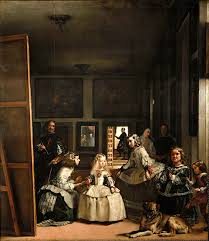
"Las Meninas", Serge Diaghilev’s first Spanish ballet, inspired by the Velázquez painting of the same name, was written in the summer of 1916, when he and Leonide Massine, with other creative cohorts, came to Sitges.

We’ve all heard of the Bolshoi Ballet, and the Kirov Ballet (The Ballet Company of the Mariinsky Theatre), two of the most famous ballet companies founded in the 18th century, which continue to tour the world today. One such classical ballet company, founded by Russian impresario Serge Diaghilev in Paris in 1909, the Ballets Russes, became the most innovative ballet dance company of the 20th century, moving traditional geometric ballet into more natural modern movement.

Diaghilev employed the talents of some of the most renowned artists and designers of the day to help bring his productions to life linking art, design, and performance. The costumes, set designs, paintings, drawings, and prints were created by the likes of Pablo Picasso, Henri Matisse, and Coco Chanel among others, and the music was written by Claude Debussy, Igor Stravinsky, Sergei Prokofiev, and Erik Satie, to name a few.

The artistic collaborations also included Russian choreographer and dancer, Léonide Massine (Leonid Fyodorovich Myasin), who, from 1915 to 1921, was the principal choreographer of the Ballets Russes, where he sometimes combined elements of Spanish dance with ballet.

The short ballet, "Las Meninas" inspired by the Velázquez painting of the same name, was written in the summer of 1916, when he and Massine with others, came to Sitges. Diaghilev was said to be in "ecstasy at the beauty of Spain". Gabriel Fauré had the task of setting the ballet to music and selected his Pavane in F-sharpminor, op. 50, which originally dates back to 1887. Here it finally gained fame and is now intrinsically associated with this ballet. Las Meninas, or The Gardens of Aranjuez as it is sometimes called, shortly thereafter became a part of the Ballets Russes’ repertoire.

The designs for the production were by Barcelona born José-María Sert.
And it is no small wonder that these men came to Sitges at that time—because Sitges had a growing reputation for attracting artists and writers, and was the home of Santiago Rusiñol, a very close friend of Sert. José-María's costumes were stunning and enormous. The skirts were said to be twice the length of arms and the wigs were twice the width of the shoulders! They looked wonderful on stage (though the iron panniers, frames supporting the skirt, cut painfully into the dancers’ shins).

From an Australian production of Las Meninas
At the same time Sitges was alive with activity and notoriety. Miquel Utrillo was finishing the Palau Maricel and acquiring fine art on behalf of its owner, American Charles Deering (who spent most of that summer in Sitges too). There had also been correspondence between Deering and Sert, who was commissioned to create paintings for one of the rooms of the Palau.

The premiere of Las Meninas was in San Sebastian on August 21st and was performed a week later in Bilbao and again in spring of 1917, in Naples and Rome – all starring the ballerina Olga Khokhlova, Picasso’s first wife.

During this period as the company toured Spain, an enigmatic notebook was kept (either by dancer Félix Fernández Garcia or Massine) with notations in Spanish and Russian containing drawings believed to illustrate the lessons Garcia gave Massine in Flamenco dance with references to Sitges in 1918. 

As great an artistic endeavour as it was, the ballet never achieved wide success, although it remained a favourite of Diaghilev. And it’s nice to know that in some small way, inspiration was found at that time, not only in painting or sculpture but also in dance and design, along the sands of Sitges.


Velaquez's Las Meninas (1656) / Maids of Honour

Pablo Picasso's Maids of Honor (1957)
Scribe Note: *This is the first time I’ve published a complete article of the SQ online.


On display is the countess’s famous “Lily Dress” (circa 1896)

Proust’s Muse, one of the exhibitions at the museum today is based on La Mode retrouvée: Les robes trésors de la comtesse Greffulhe, an exhibition that was organized in Paris at the Musée de la Mode de la Ville de Paris, which is the repository of the countess’s wardrobe. “The Countess Greffulhe believed in the artistic significance of fashion,” says Dr Steele. “And although she patronized the greatest couturiers of her time, her style was very much her own.”


Valerie Steele, director and chief curator of The Museum at FIT, talks about the history of fashion within Marcel Proust's work and the legendary wardrobe of Proust's Muse, Élisabeth de Caraman-Chimay.

Featured Music:
Gabriel Fauré, Paellas et Mélisande, Op. 80 - III. Sicilienne
DuPage Symphony Orchestra
Gabriel Fauré, Paellas et Mélisande, Op. 80 - IV. La mort de Mélisande
DuPage Symphony Orchestra

Featured Photos:
Olivier Salliard © Grégoire Alexandre
Countess Greffulhe by Otto Wegener, www.metmuseum.org

"Proust’s Muse, The Countess Greffulhe" runs through January 7, 2017 at The Museum at FIT in NYC. This exhibition was developed by the Palais Galliera, Fashion Museum of the City of Paris, Paris Musées.