Friday, 23 January 2015

Look Who’s Enjoying the Sitges Quarterly Magazine: Alfonso Cuarón

Known for his incredible stories, his films are also very much character driven, engaging the audience to feel their personal, emotional experiences no matter the budget of the film.


Alfonso Cuarón Orozco is the filmmaker of Gravity, Children of Men and of course, Y Tu Mamá También. He is also the director of Harry Potter and the Prisoner of Azkaban.

I must admit, although I knew that he is a director held in high esteem and of a few of his earlier films, I’ve been so very busy in research for a new project I’m working on (watch this blog!!), that I didn’t associate him with his Academy award win last year for Gravity. He defeated a group of men including: Steve McQueen (12 Years a Slave), Alexander Payne (Nebraska) and Martin Scorsese (The Wolf of Wall Street). And in doing so, Cuarón became the first Mexican-born director to win an Oscar.


I wasn't even aware of the The Museum of Modern Art (MoMA) Film Benefit honoring him in New York City late last November—considering my research took me to the city not only for the new project, but also for the next issue of The Sitges Quarterly magazine.


Having spoken with him about his films, friends, The SQ magazine and about the stories we cover, it is easy to see why he is a successful writer. He is very personable and focused on to whom he speaks. He is interested in people; a trait that no doubt helps him to write realistic characters and bring them to life on screen. And despite my interrupting him from his writing, he was charming as ever, giving me his full attention.

Enthusiastically, he said that he looks forward to coming to Sitges in order to attend its International Fantastic Film Festival of Catalunya which he’s heard good things about from his good friend, director Guillermo del Toro. I added, “I will hold you to that promise”!
And with the SQ in hand, he’ll know more about us…


Collaboration • Col·laboració • Colaboración


Along the lines of creating community (the mission of the Gay Sitges Link association), as I devised the concept for what is now The Sitges Quarterly Magazine, connecting residents and visitors was only part of the endeavour.

I felt Sitges was such a unique and wonderful place yet only superficial information about it was readily available to the public at large. What was available was information about its beaches, its location and a little about Santiago Rusiñol – the artist who put Sitges on the map as an artistic, attractive Mediterranean getaway. Information of any real substance was not available in English.
How extraordinary! Considering how popular it is as a holiday destination today, very little of its history is widely known… and so, I decided to change that reality.

Through collaboration with Sitgetans, day trip visitors, business conference attendees and holidaymakers, an exceptional project consisting of interesting perspectives, histories and stories could be remembered, found and shared. Photographs and historical anecdotes and events could be captured to grace the pages of the SQ. And now audio clips, home movies or news clips can be uploaded to this blog!

An excellent example of such collaboration began in the very first issue of the SQ with our Hidden Jewel feature. We featured a lovely stone relief carving, a capital on the exterior wall of the Palau Maricel near the church; it’s alongside several others with the typical theme of a group of men engaged in some activity. This one had the head of a woman with flowing hair and head cover beside a dog or wolf. And we weren’t sure of what it represented.


We invited everyone to write to us, in regard to “any feature, photo or information in our articles” and for any featured Hidden Jewel found in Sitges. We asked you to “please go find it and report back if you have any ideas about it”- and you did! In fact, we were very pleased to receive an email from Fran Romero.

It turned out that Fran had done some research on the Palau Maricel for a project of his, and he shared some his knowledge about the Maricel with our readers. He said that this capital in particular was the “most mysterious” of all of the capitals around the town and that all of them contain hidden stories, fables and depicting traditional Sitgetan life. The capitals of the doors and windows of the building were made ​​by Pere Jou, whose grandson has published several very interesting books of his grandfather's work*.

Fran Romero: “As I read (the SQ1), you are asking to be informed about this beautiful sculpture. Pere Jou loved tales and fables and this capital in particular represents the fable "The Fox and the Bust", which reads…

"Said the fox to the bust,
after smelling it:
'Your head is beautiful,
but brainless'

Like this there are many,
and although they appear men,
they're only busts”.

It was very heart warming to have moved someone enough for him or her to share such a story, and Fran touched the SQ team in return by doing so. He also offered an invitation to us, that if ever he could help us–all we had to do was ask.
And so I did!

As we were putting together the next issue of the SQ (no.5 – The Americanos) and because the Palau Maricel was created in that period in the history of the town, I asked him if we would like to collaborate with us and write a brief article about this important site. He obliged and wrote, “Palau Maricel: The Magnificence of Sitges”.


Hopefully it was the beginning of many more collaborations and partnerships to come.

Who knows what gems are waiting to be discovered? To be discovered, and help tell part of the on going story that is Sitges.

*[L'sculptor Pere Jou—Jou i Mirabent. Grup d'Estudis Sitgetans (1991, in Catalan)]


Thursday, 22 January 2015

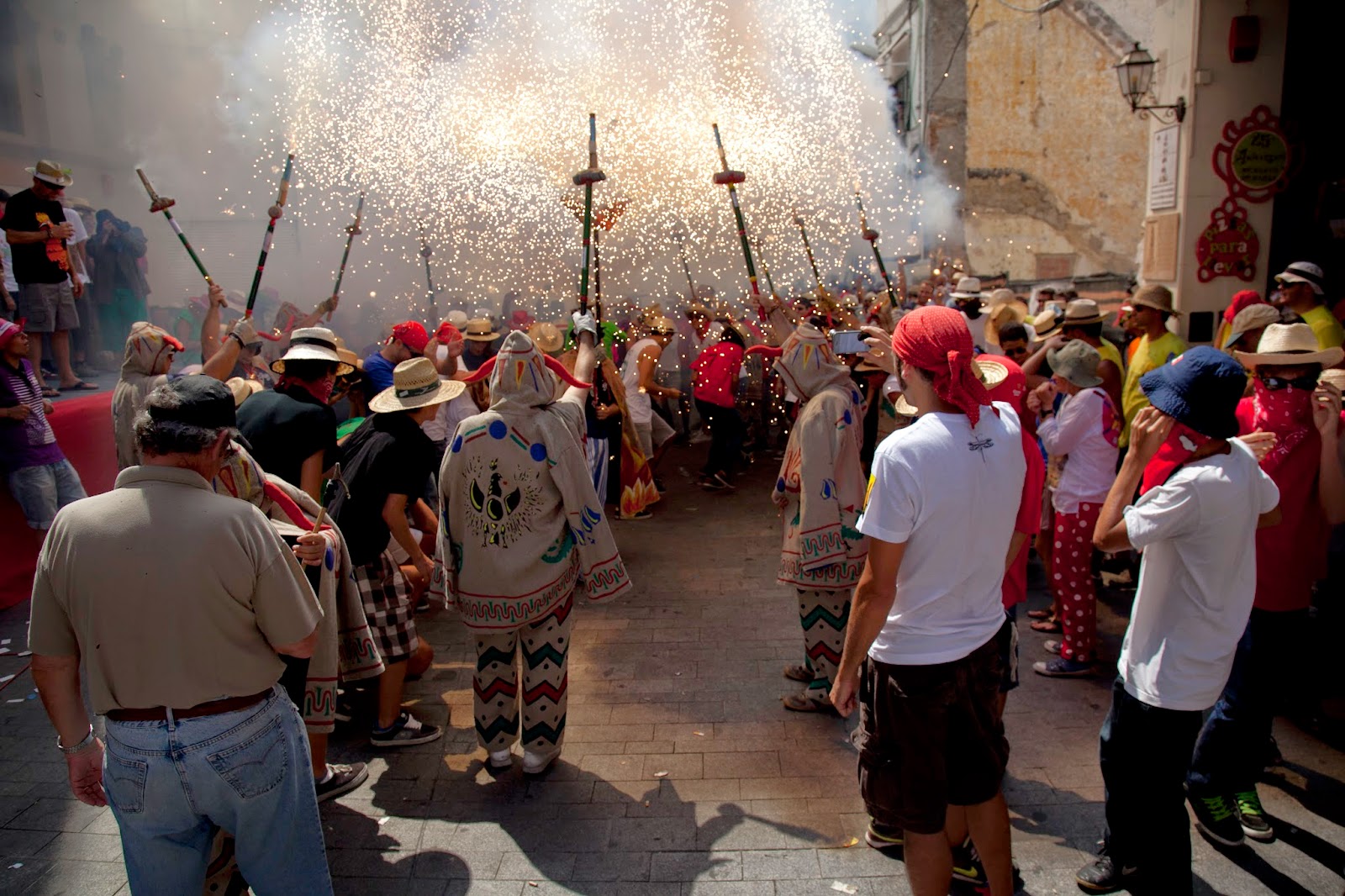
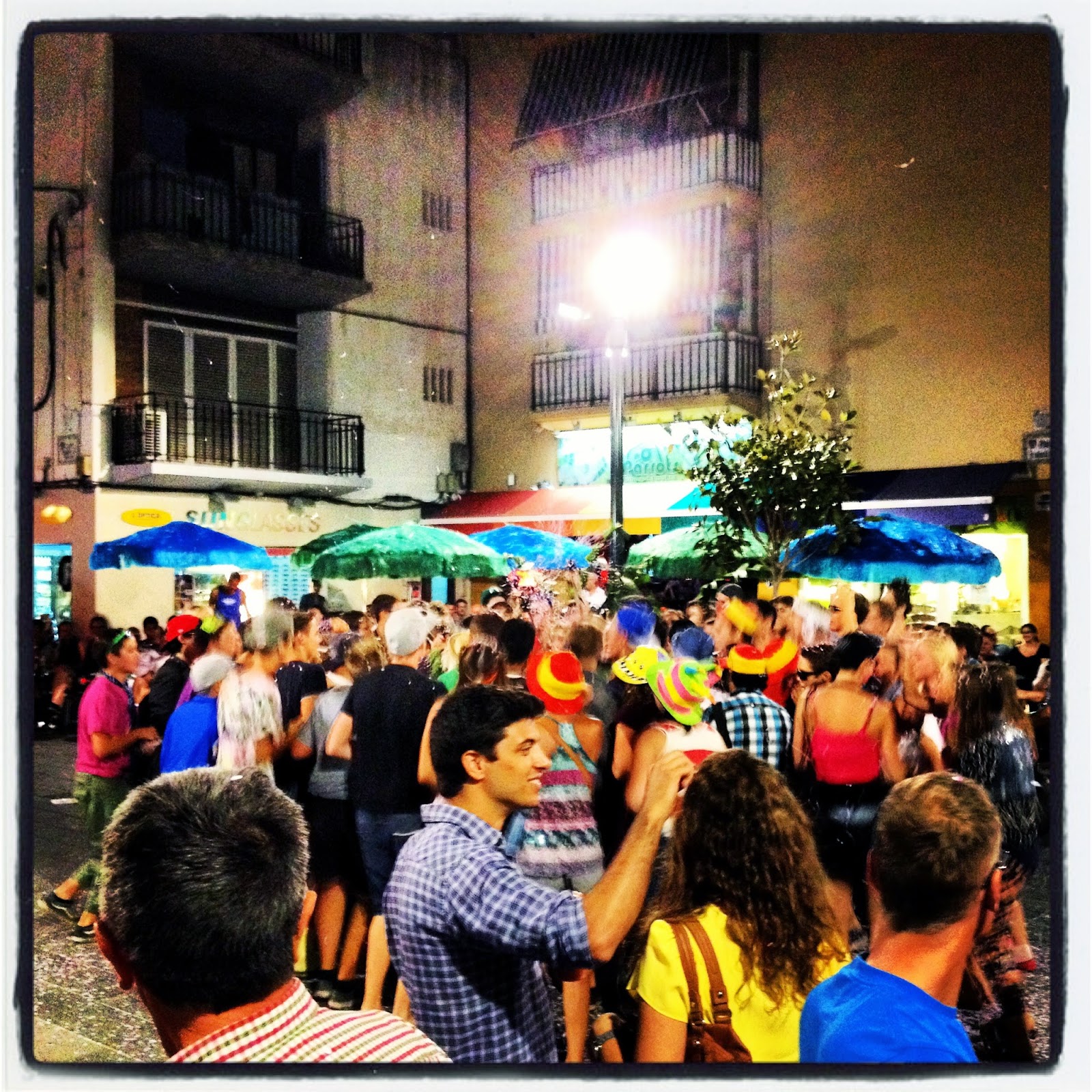
The Town of Festivals

Photos by Joan Valera

Logo de Turisme de Sitges


La Blanca Subur, or what is today, Sitges. A town known to be a place to holiday, to attend a conference, take weekend trips or enjoy a festival. Disused today, it was back in 2008, when the Ayuntamiento (Town Hall) commissioned a Barcelona based company to design a logo for the branding of Sitges as Sitges, Vila of Festivals. Why?


Because a town like Sitges, steeped in tradition, over time annually held many celebrations. There were celebrations for certain seasons, religious saints and artistic endeavours. Festivals are vital because they can help us understand our history. They also record patterns of cultural importance and change, and even highlight social trends, most recently, the Sitges Gay Pride. Events of a festival also allow opportunities for communities to come together and can broaden our cultural horizons.

In Sitges we see them as making a valuable contribution to the development of our tourism industry. Local businesses in town definitely benefit from new business that a festival brings and we see the event as good for the local community overall.


In the SQ, what we try to do in the In Season (En Temporada) section–is to demystify them. We research the festivals origin, we discover and learn what relation it has with the town and “pay it forward”, or share it with all who observe or participate in the festivities and read the content of our pages.


This Year 2015, in addition to several holidays, we celebrate:

   February 12th-18th Carnival of Sitges
   The Parades are on Sunday, the 15th and Tuesday, the 17th
   
   March 12th–15th International Patchwork Festival

   April 9th–12th Jazz Antic Sitges Festival (J.A.S.)

   June 6th and 7th The Corpus Festival
   Sunday 7th, the street carpets made of flowers are on display

   June 18th-22nd Sitges Gay Pride

   June 26th–28th The Poetry Festival

   August 20th—25th Festa Major de Sitges
   Sitges’ main annual fiesta in honour of Saint Bartomeu,
   one of the town’s patron Saints.

   September 22nd—23rd Festa de Santa Tecla
   Sitges’ main annual fiesta in honour of Santa Tecla,
   one of the town’s patron Saints.

   October 1st–31st Tasta Sitges (A Gastronomic Festival)

   October 4th–5th The 53rd Festa De La Verema—
   Grape Harvest Festival & 8th Wine Tasting Experience

   October 9th–18th

   The 48th Sitges International Fantastic Film Festival of Catalunya

And of course, we celebrate the festivities of Christmas on December 25th, continuing through to the Three Kings Parade (La Cavalcada de Reis or La Cabalgata de Reyes) in January.


Although the authorities have decided to build the local economy on tourism, personally, I believe a better way forward for Sitges would be to diversify its economy. It would better carry us through times of global crises and slumps in the travel trade… putting that aside, what better way is there to spend your time in Sitges, a “vila of festivals”?


Reflection


 The beginning of the year usually invigorates hope for the future and yet at the moment I reflect on the many people who have come and gone here since my move to Sitges.

Sitges being a resort town attracts summer seasonal workers, but more than that, it attracts the artists, the party people, the northern Europeans and what I call - the temporary residents, the Restless.

Nothing wrong with them, but after the euphoria of our beautiful summer, the reality of everyday living sets in and the ones who love the hustle and bustle of the "season" find themselves in a very different Sitges. A quiet Sitges belonging to those who have relocated and remained here for more than a decade, and the old, established families that have their name on the many storefronts and above doors of various businesses around town. 

Those who have witnessed the changes in the landscape and been part of the town's evolution can tell stories of events, which have made a mark on its rich local memory.


Happenings that may or may not have been written about or recorded; fleetingly enriching life here, nevertheless somehow ever present, avoiding a scheduled departure from the collective mind. Like the Stargazer watching over playa San Sebastián back in 2007, by Barcelona artist Robert Llimós, or last summer’s flash mob dance in Plaça Industria – a sign of the times depicted in public art expression. They were captured artistic endeavours that stole the imagination.


Or Hola Club Sitges, a beach bar/café that arrived last summer for a chill-out trendy run, and today is gone… hopefully to return this summer!
(Look at the photos of the location carefully)


Maybe now, in this new age of technology, there’ll always be someone with a mobile device who'll capture the moment or temporary stay with a photograph, sound bite or video clip sharpening the "image" taken by memory for clearer recall; never really losing good times or friends past who embarked on the train leaving Sitges, forward along the coast, riding the rails on their track to the future.


Sunday, 7 December 2014

The GSL-Vision Magazine

From the First GSL-Vision Magazine 2014:


Editorial 1

Hello Members, Donors and Friends of Gay Sitges Link (GSL),

Welcome to the first issue of GSL Vision Magazine! Up until now, the GSL has published a monthly newsletter informing you of its happenings in Sitges.

This year, we have moved into a new office, refocused the charity on LGBT issues, and have a new vision for the future; hence, the name of the magazine—GSL Vision Magazine.

The magazine will have regular features covering a myriad of topics to assist members of the local LGBT and gay-friendly community as well as LGBT visitors to Sitges; and link Gay Sitges Link with the global gay community.

As Editor-in-Chief of the magazine, it is my honour to spearhead this medium as the voice of the charity and share the wide spectrum of its work and the intent of its volunteers. And by communicating its activities, connecting individuals and networking with other organizations, every year we’ll work towards achieving GSL’s mission of helping to create an all inclusive environment for living, here in Sitges.

With half the year left, look within our pages, and join us to realise our vision for a bright future.

Editorial 2.2

From the SQ4: "Artistic Sitges"


Editorial 2.2

Art – it is all around us in Sitges. Art has a presence throughout the town. Statues and sculptures are lovely accents along our seafront, enjoyed by many every day. Decorative tiles enliven our streets, house façades and benches on the paseo. We are proud of our numerous interesting museums, and you don’t have to walk far in the centre of town to spot one of our art galleries—each one having its own style and flavour that invite the passer-by to drop in and browse.

The light that bathes our coast has attracted artists for many decades, inspiring them to express themselves in many forms—painting, sculpture, photography, dance, architecture, and more. Their art, over time, has captured different aspects of Sitges’ everyday life, reflecting the era in which it was created, giving us glimpses into what life was like and showing us how the town acquired its artistic legacy.   

See our creative side, and be inspired.

Editorials 2.1

From the SQ3: "Made in Sitges"


The Editorial 2.1

The crisis. Who hasn’t been affected by the crisis, which continues to have an impact on us professionally, financially and emotionally? Whether we own or manage a business, or work in health, education or government, chances are we have felt or seen a difference in our lives.

Sitges was known as a port town in antiquity, a sleepy fishing village for most of the 20th century, and now as a popular European resort town. But what else can be found here?   

Our focus this issue is to take a broad look at our local economy and see some of what we offer at large. We thought we’d name this issue, Made in Sitges. Let’s look at the motor of Sitges; in other words, the driving force of business. Sitges has produced shoes, auto parts, local cuisine and services and even created globally recognizable brands.

I hope by demonstrating our history of industrious endeavours, this issue inspires the entrepreneurial spirit.

See Sitges in a different light, see beyond the sun and sand.

The Epilogue

In this issue of the Sitges Quarterly, we wanted to highlight what Sitges has offered commercially over the years in addition to tourism. We thought it was important to showcase examples of varied and sometimes unconventional aspects of business; and we hope it inspires the development of new and different initiatives.

I read the words of a New York Times columnist, Thomas L. Freidman, recently and his words resonated for me. He said, “The combination of digital tools of connectivity and creativity has created a global education, commercial, communication and innovation platforms…. [Technology] empowers individuals to access learning, retrain, engage in commerce, seek or advertise a job, invent, invest and crowd source—all online”.  He believes that, with an individual’s ability to do these things, comes added responsibility.

He says further: “The boundaries are all gone… the walls, ceilings and floors that protected people are also disappearing. Government will do less for you. Companies will do less for you. Unions can do less for you. There will be fewer limits, but also fewer guarantees”; these words I think couldn’t be more true.

In terms of employment, it seems today, when companies hire personnel, the focus is not necessarily on where you’ve obtained your knowledge or experience—it’s what you can do with it. How best can you utilize what you know?

The level of empowerment for individuals has increased exponentially. With new technologies, internet possibilities, ingenuity and creativity, I have no doubt we will get through these difficult times to a brighter future.